Being a parent is nonstop hard work, making it challenging to stay on top of news that impacts families in Washington state. This Hits Home is your weekly hit of news, commentary, and, occasionally, opinion. Want to have a say? Look for the ‘Take action’ prompts. Here’s the update for the week of Feb. 9-15.
SPS expands highly capable program to two more schools
With Seattle Public School highly capable services available in only one elementary, middle, and high school in Seattle, parents and teachers have long voiced concern over inequitable access to specialized educational programs for K-12 students who perform or show potential to perform at significantly advanced academic levels.
The district announced last week that, as of next September, the highly capable program will also be available at Rainier View Elementary in South Seattle and Alki Elementary in West Seattle. They join programs at Thurgood Marshall Elementary, Washington Middle School, and Garfield High School in the city’s Central District.
“These new sites are a direct response to what we heard during our community engagement sessions—families and educators asked for services closer to home,” wrote Paula Montgomery, drirector of SPS’ Highly Capable program, in an email to parents. She added the program gained 700 students this year.
Which site a student would be assigned do depends on their home school elementary boundary:
- Rainier View Elementary will serve Emerson, Rainier View, Dunlap, Wing Luke, MLK, Graham Hill, South Shore, Dearborn Park, Maple, and Rising Star elementaries.
- Alki Elementary will serve Lafayette, Alki, Genesse Hill, Fairmount Park, Gatewood, West Seattle Elementary, Sanislo, Concord, Highland Park, Roxhill, and Arbor Heights elementarie.
- And, Thurgood Marshall Elementary will serve Hawthorne, Montlake, McGilvra, Stevens, Lowell, Madrona, Leschi, Bailey Gatzert, Beacon Hill, Thurgood Marshall, Kimball, and John Muir elementaries.
Montgomery also clarified for kids already in highly capable classrooms: “Families with students currently attending Thurgood Marshall also have the option to remain through 5th grade. Additionally, there is no further action needed for families who would like to remain at their current school.”
Results for highly capable entrance assessments for the 2026–27 school year are out this month, and SPS has extended the enrollment window for all five locations for current and newly identified advanced learners through Feb. 28. Late applications will be accepted through March 31. Learn more about the district’s distribution of highly capable students in this article from The Seattle Times.

(Image of courtesy The Reptile Zoo)
Good-bye to The Reptile Zoo, again
It’s for sure this time: The Reptile Zoo, a popular haunt for reptile-loving kids since 1996, will close its doors permanently on Feb. 16.
The once-busy 7,000-square-foot roadside menagerie in Monroe first announced its closure last October. Zoo owner Isaac Petersen said then that the attraction suffered during the pandemic and has since been burdened by rising costs. The October media coverage drew visitors to the zoo on Highway 2, leading to a brief comeback that ends this week.
There’s no going back this time. Zoo owners have rehomed most of their animals—although some are still available. If your family has the know-how and space, you mightconsider contacting the zoo. Read the whole story at Seattleschild.com
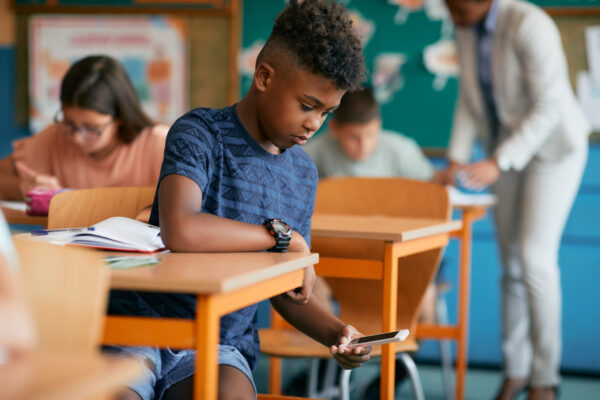
Should phones be banned at the state level? (Image: iStock.com)
Should WA follow the stateside cellphone ban trend?
Washington state does not currently have a statewide law that outright bans cellphones in schools. Here, we allow school districts to make their own restrictions (or not) on student use of cellphones and other mobile devices. And all districts in the state have some form of restriction or ban in place to stop kids from using devices in class or on school grounds.
But a statewide no cellphone rule? Not here, not yet. But if the momentum behind statewide cellphone bans and restrictions in schools continues, maybe one day Washington will follow suit.
According to a recent report by Stateline, the nonprofit news network, more than half of states (38 states and Washington, D.C.) have enacted a state-level law that restricts cellphone use in schools. And teachers, superintendents and education experts are waving flags of praise and celebration. They connect state-level policies to increased student attention and learning, improved student mental health, and stronger school communities.
For those states, the legislative question is: for how much of the school day should distracting devices be inaccessible to students?
Currently in Washington, which falls smack in the middle of two major student achievement scales and still has many students struggling with math and reading, the state legislature is considering a measure that addresses cellphone use in school.
On Feb. 11, the Senate fast-tracked and approved Senate Bill 5346, which would task the Office of Superintendent of Public Instruction (OSPI) with gathering research, best practices, and district policies on limiting use of mobile devices in schools. The measure would help districts develop strong cellphone policies. So no statewide ban this year. For us, the question remains, “Is the decision to ban cellphones in schools really a local issue?”
TAKE ACTION: Do you have an opinion on whether a ban on cellphone use in schools should be mandated by state law? I’d love to hear it. Email me at cheryl@seattleschild.com. You have a voice on SB 5346: reach out to your representatives in the state House and Senate.

Greenhouse gas causing car exhaust (Image: iStock.com)
Speaking of flowers …and Trump’s reversal of climate change protections
If it feels like spring is arriving earlier each year— or lingering longer — in Seattle, you’re not imagining it. Long-term weather data from stations across Washington show that last frost dates are creeping earlier, and those first truly warm days are appearing earlier on the calendar. Scientists call it “season creep.” Over the past century, the Northwest has steadily warmed, according to the U.S. Department of Agriculture Climate Change Impacts in the Northwest webpage.
And, as the Washington Department of Health points out, climate change means the pollen Washington now starts about 20 days earlier and stretches roughly a month longer than it did three decades ago.
So yes, Virginia, er, President Donald Trump, climate change is real. Just ask NASA and the National Academy of Sciences, whose evidence-based research finds a clear and inarguable link.
And yet, last week, Trump revoked the Obama-era foundation for federal climate protections in the U.S. — a scientific finding that said greenhouse gases like carbon dioxide and methane endanger public health and welfare. That “endangerment finding” was what allowed the federal government to regulate vehicle tailpipe emissions and other greenhouse gas pollution under the Clean Air Act, and its undoing removes that legal basis. And unless Congress acts, or courts block the change, the country will not be able to regulate the single largest source of greenhouse gases.
Trump says it will lower consumer costs and expand vehicle choice. Climate scientists and environmental advocates warn that it undermines decades of climate progress and weakens the country’s ability to slow global warming and protect public health.
You’ve got kids. Your kids, grandkids, and their progeny will inherit the planet. What do you think about one of the most far-reaching decisions of the Trump administration?
TAKE ACTION: I want to hear how you feel about the revocation of the endangerment finding; what concerns do you have, if any? Email me at Cheryl@seattleschild.com. Do you think Congress needs to take action on this issue? Make your voice heard. Contact your members of Congress.
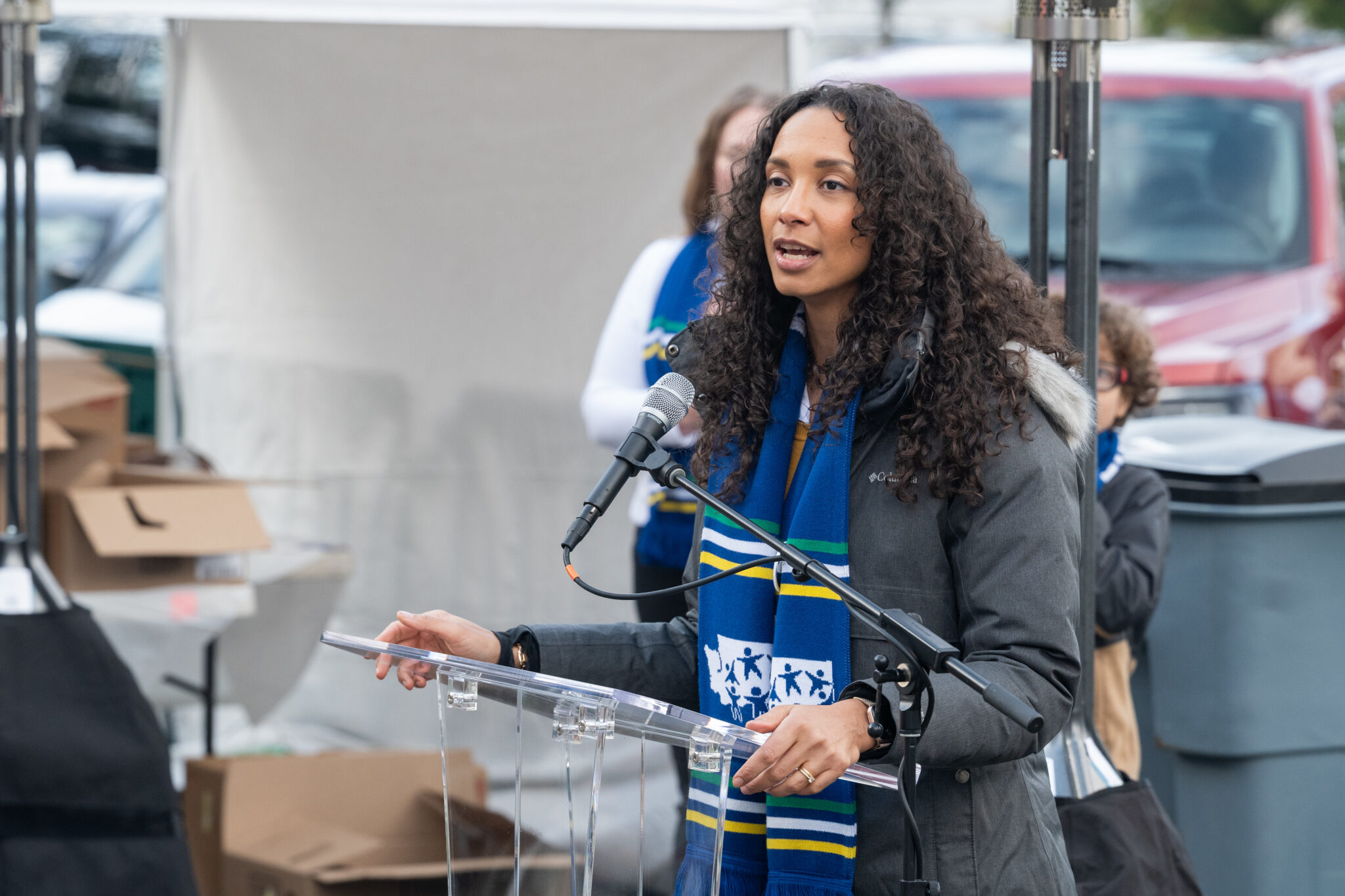
Dr. Soleil Boyd, executive director of Children’s Alliance speaks in Olympia in January (Image: Children’s Alliance)
Could a ‘millionaires tax’ be an investment in a future for all families?
The bill that would impose a 9.9% tax on Washingtonians who earn more than $1 million in a year was passed out of the Senate Ways and Means Committee last week for consideration by the full Senate. If passed by the full legislature and signed into law by Gov. Bob Ferguson, Senate Bill 6346, (the “millionaires tax,”) would start collecting about $3.5 billion a year in 2028, with some exemptions and restrictions. In response, Washington’s largest statewide nonprofit children’s advocacy group, Children’s Alliance, threw its full support behind the potential tax.
“Revenue from this tax would primarily go into the state’s General Fund to support vital programs and services like health care and education,” Dr. Soleil Boyd, Children’s Alliance executive director wrote in a Seattle’s Child op-ed on Friday. The tax, Boyd wrote, is a key to stopping the cycle of cutting vital programs in times of state budget deficit only to refund them in better financial times.
“This year, many critical programs are at risk of funding cuts and delays – but one stands out: early learning,” she wrote. “Cuts to early learning make up 40% of all proposed cuts in the budget, which would cause thousands of families to lose access to care and leave early learning providers without the necessary resources to provide a living wage for their staff.”
Read Boyd’s full argument in support of Senate Bill 6346.
TAKE ACTION:To make your voice heard on the proposed “millionaires tax,” reach out to your representatives in the state House and Senate.
Parents! Take this survey!
This month, 4Culture, King County’s cultural funding agency, wants to hear from county residents—especially families—about how often, where, and when you go out to explore the region through theater, museums, festivals, music, films, public art, and other events and cultural activities.
As 4Culture explains, the King County Resident Cultural Participation Survey helps 4Culture understand, measure, and improve access to arts, heritage, and cultural experiences. It’s focused on identifying participation trends and barriers to equitable cultural opportunities in the county. The survey is one tool the agency uses to determine how it spends money from the county Lodging Tax and other revenue to support the “cultural sector.”
The survey takes about 9 minutes to complete and asks questions to determine how many outings include kids, or for which the main reason for going is to spend time as a family.
TAKE ACTION: Help the county ensure arts and culture remain a high priority. Take the survey here.
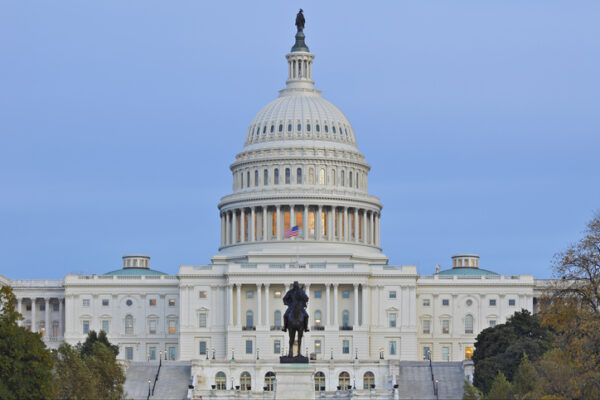
United States Capitol building in Washington DC (Image: S. Greg Panosian)
Murray and Cantwell announce federal budget wins for Washington kids and families
Those sneaky top Republicans and Democrats. According to an article this week in the New York Times, they managed last week to work together and pass several bills that, together, make it harder for President Donald Trump and his administration to go around Congress when allocating federal funds. Washington Senator Patty Murray (D-Bothell) is one of those top Democrats who pushed for codifying the rules and funding levels the administration must abide by when allocating (or withholding) federal funds.
Along with that win, Murray, vice chair of the Senate Appropriations Committee, and Sen. Maria Cantwell (D-Edmonds), who is chair of the U.S. Senate Committee on Commerce, Science, and Transportation fannounced Washington projects of impact to kids and families that will receive federal dollars in 2026. Among the greater Seattle-area wins:
- $3.15 million to build affordable housing units in Seattle
- $3 million to Seattle Children’s Hospital for construction of a youth behavioral health crisis stabilization observation unit
- $800,000 for United Way King County to improve emergency food distribution system
- $1.5 million to the Seattle Indian Services Commission for the construction of affordable housing, early learning center, and a child care facility
- $300,000 to Seattle-based statewide Page Ahead Children’s Literacy Program and its Book Up Summer program providing free books for kids and book discussion nights for families
- More than $7 million to City of Seattle and groups like Renton’s Friends of Youth in support of affordable housing
- $2 million to support high school maritime education programs in Tacoma and Port Townsend
- $4.5 million to Seattle Indian Health Board to build a health center
- $100,000 to Children’s Therapy Center to support resource navigation services for parents and caregivers of children with disabilities
- $6.2 million for the construction of a new early learning center in Bremerton
- $600,000 for the organization Open Doors for Multicultural Families in support of a new, early childhood education center at the Kent/Des-Moines Light Rail site
- $850,000 to Edmonds to build a new food bank in a more convenient location,
- $1.6 million Sea Mar Community Health Centers
- $2 million to Lake Forest Park toward construction of the Lakefront Park Community Center Project
- $250,000 to the City of Federal Way for day care relocation and renovation
Seattle and King County sync regarding protecting families from ICE aggression
Seattle’s new Mayor, Katie Wilson, has already taken a tough stance on immigration enforcement agents in the City. Two weeks ago, Wilson ordered that U.S. Immigration and Customs Enforcement (ICE) agents are barred from using city-owned property. She also committed $4 million in legal defense funds for residents facing immigration proceedings, opened a dedicated hotline where community members can report ICE activity, and instructed Seattle Police to document federal immigration enforcement actions occurring within city limits.
The county’s chief is right there with Wilson.
Last week, King County Executive Girmay Zahilay issued his first executive order since taking office last year. In it, he too banned ICE from making arrests in non-public areas of county-owned buildings and properties.
And, like Wilson, Zahilay went further. He committed $2 million in emergency funding to help immigrant and refugee families access legal services, maintain their housing, and keep food on the table. The order also directs the King County Sheriff’s Office to outline how it responds to calls to 911 reporting immigration raids.
“Every resident who calls King County home, regardless of their citizenship status, deserves safety, dignity, and to live without fear or intimidation,” Executive Zahilay said in a release.
While immigrant families still live in fear of ICE aggression and arrest, city and county leadership and policies aimed at protecting them from aggressive and possibly illegal ICE tactics speak volumes. As Mayor Wilson recently put it, “This moment demands action.”
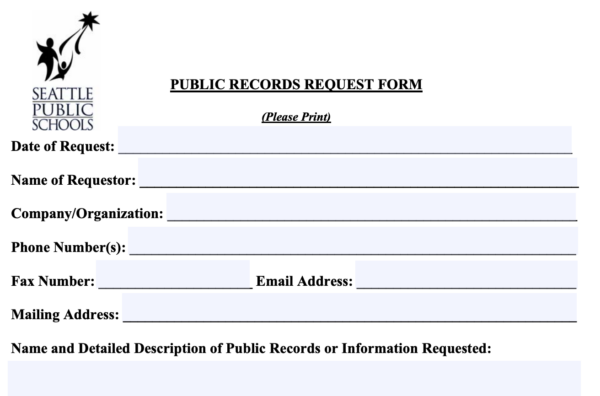
Are people abusing the Public Records Act to hurt school districts?
A bill moving through the Washington legislature seeks to find ways to discourage people from misusing the state’s Public Records Act to target school districts. HB 2661 addresses records requests that are “frivolous, retaliatory, or harassing” and that place a heavy burden on school district resources and personnel.
By driving up financial, legal, and operational strain—especially when districts must respond to complex, high-volume requests tied to controversial issues and spend extensive staff time redacting and reviewing records—these demands can pull resources away from classrooms and into compliance, heightening the tension between transparency and student privacy.
The amended form of the bill, which now goes to the full House of Representatives for a vote, requires the state’s Joint Legislative Audit and Review Committee to form a work group to research the impacts of records request abuse on school districts. The task force invitees will now be asked to join the work group.
TAKE ACTION: To make your voice heard on HB 2661 , reach out to your representatives in the state House and Senate.
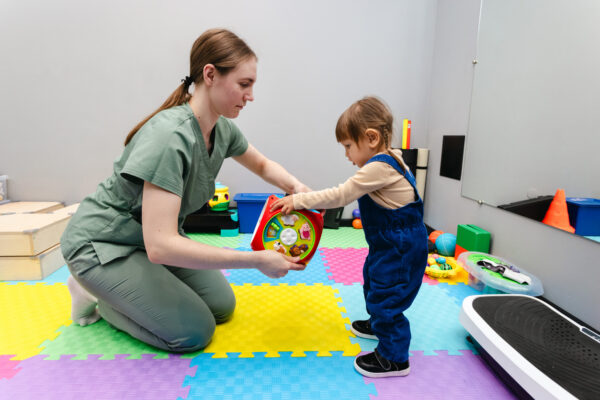
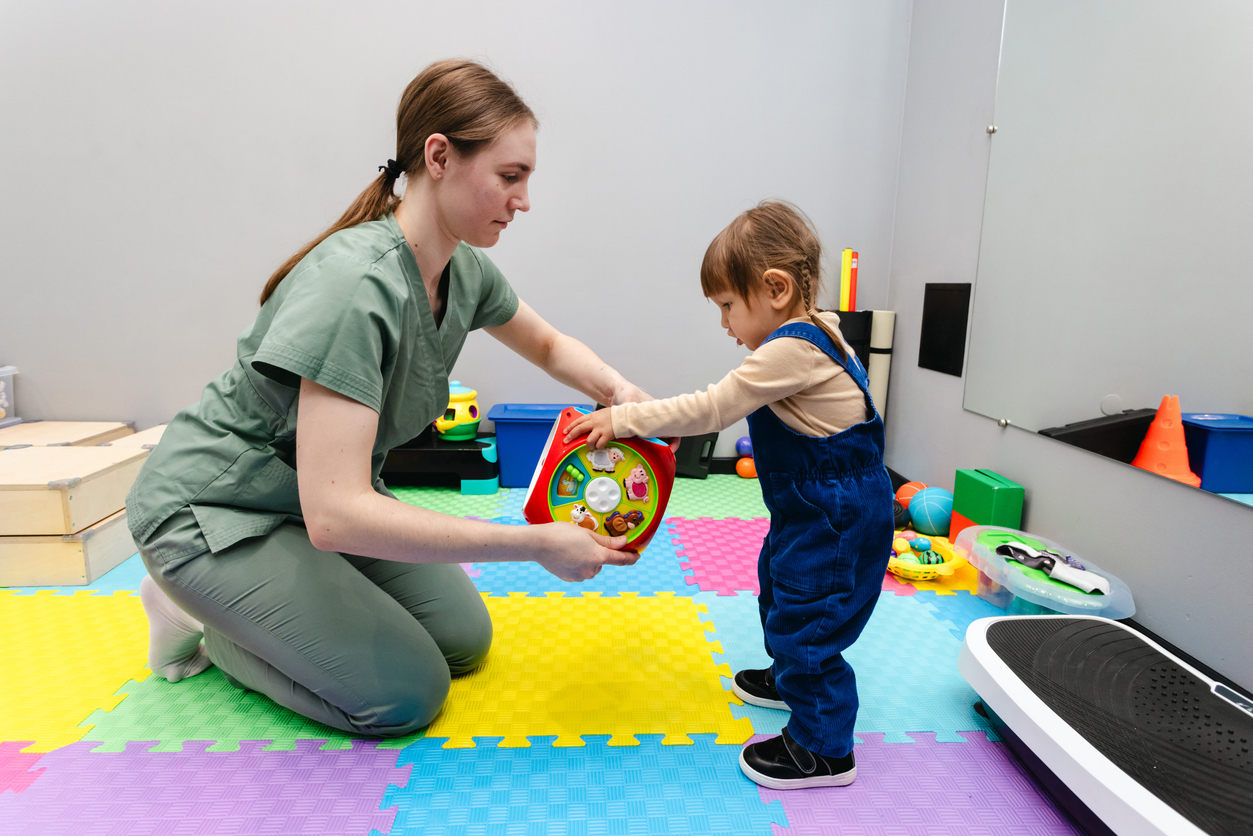
Physical therapist assisting baby with birth trauma in coordination exercise (Image: iStock.com)
Lawmakers should not balance the budget on the backs of the state’s most vulnerable kids | Op-Ed
If passed by the state legislature this year, House Bill 2688 could result in a Washington that fails thousands of its most vulnerable residents—babies and toddlers with disabilities.
Last week, the House Committee on Appropriations voted to move the proposal forward—with one big, bill-turning change. Rather than increasing the budget for the Early Support for Infants and Toddlers (ESIT) program from $48 million to about $50 million a year by increasing its funding formula multiplier from 1.15 to 1.2, the amended bill sets the formula back to the 2008 multiplier level of 1.0. The program’s multiplier is the number the state uses to calculate how much money it provides for each baby or toddler receiving early intervention services. If the multiplier goes up, programs receive more money per child; if it goes down, they receive less.
The result of the amended bill would be tragic: fewer kids receiving critical early intervention services they need to thrive and significantly less money for school districts, which provide many of those services. In King County, this means about 1,200 fewer children would have access to state-funded services to help them develop vital communication, motor, and basic survival skills (including eating). ESIT currently serves more than 7,000 infants and toddlers in the county with an array of diagnoses, among them Down syndrome, fragile X syndrome, cerebral palsy, epilepsy, hearing or vision loss, developmental delays, prematurity, severe illness, and autism spectrum disorder.
If you are a parent with a disabled baby, this bill could mean the difference between your child receiving vital early intervention and not.
Yes, Washington is facing a $2.3 billion budget shortfall for the current biennium. Most children’s programs should not expect increases when money is this tight—even the most critical and impactful ones like ESIT. But neither should they become the back upon which a deficit is balanced. The amendment moved forward by the House Appropriations Committee doesn’t kill HB 2688. It blunts its purpose.
Instead of strengthening special education funding, it goes backward, landing at a level below the status quo and leaving districts and families largely where they’ve been for more than a decade: doing more with less.
House Bill 2688 has been referred to the House Rules Committee before a vote by the full House. If approved it would need to pass the Senate before the session’s closure March 12.
Read this full opinion-editorial at Seattleschild.com.
TAKE ACTION: To make your voice heard on HB 2688 and its limitation of services for disabled infants and preschoolers. Reach out to your representatives in the state House and Senate.
 More gloom on the way. Bring on the free flowers
Forecasters are calling for a wet week—with alternating days of rain and potentially snow showers. In other words, dark, dreary, Seattle winter. Frye Art Museum has just the fix: “Wallflowers,” a new exhibit centered on, well, flowers. In other words, bright, colorful, mostly cheery and a nod toward spring.
According to the exhibit description, the installation of exhibit art was “structured to mimic the delights of navigating a cultivated garden [and] oscillates between discrete paintings and immersive patterns, between contemplation and exuberance.” The show runs until the real buds start to emerge, that is, May 17. And it’s absolutely FREE.