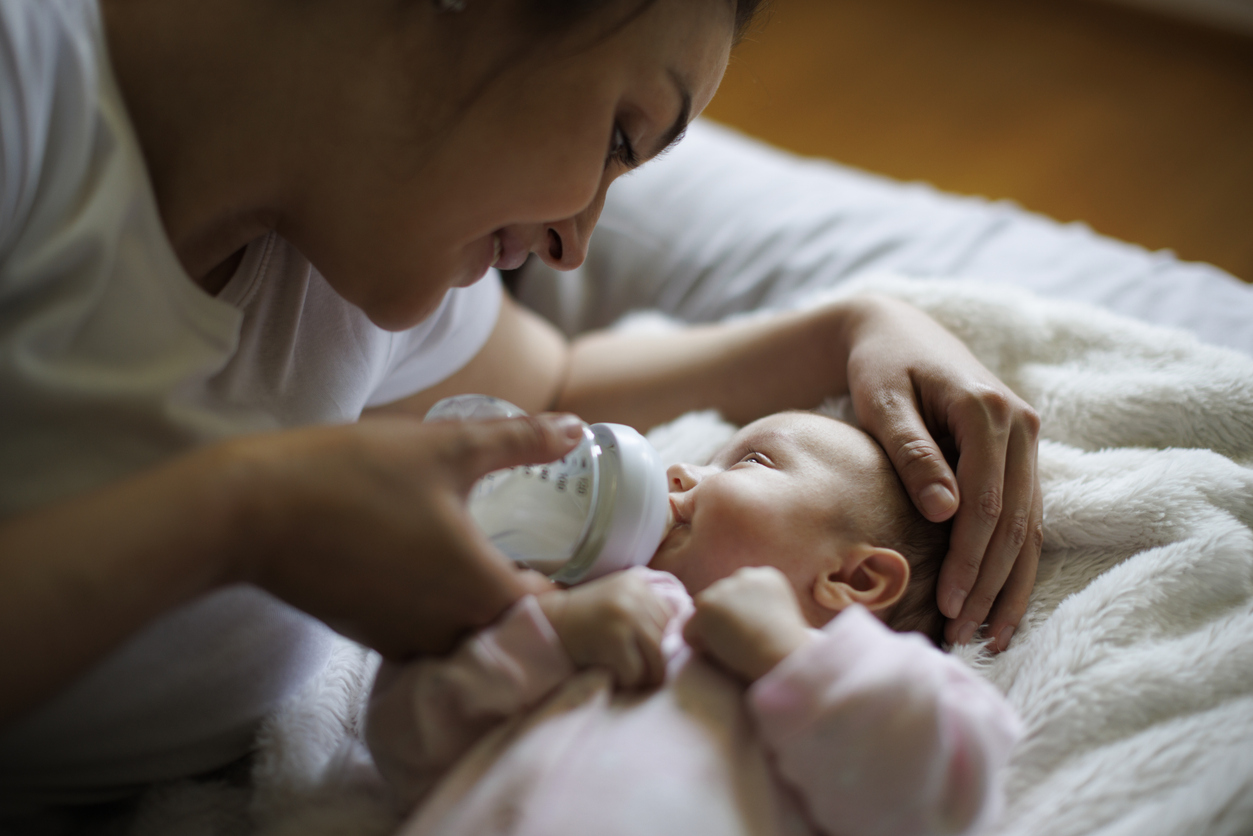
Having a baby in Washington has never been harder.
Costs have outpaced what most families can manage, especially during pregnancy and a baby’s first year, when financial stress hits hardest. Many new parents are forced to return to work within weeks and go without essentials simply to stay afloat.
Despite our state’s prosperity, there are disparities in birth outcomes and mental health among low-income, Indigenous, and Black families. Washington now has the second-lowest fertility rate in the country and is seeing its lowest birth rates in decades, underscoring the financial and caregiving barriers families weigh when considering having a child.
A statewide direct cash-transfer pilot for pregnant people and new parents will help ensure that those who do choose to grow their families can do so with stability, dignity, and support. The earliest months of life shape everything that follows.
Michigan just showed the country what’s possible. In Flint, the Rx Kids program delivered unconditional cash during pregnancy and babies’ first year and saw an 18% drop in preterm births, a 27% reduction in low birthweights, and roughly a 29% decline in Neonatal Intensive Care Unit admissions. That reduction alone prevented nearly 60 costly hospitalizations a year and generated an estimated $6.2 million in healthcare savings. Families also reported dramatic financial and mental-health gains, including a 91% reduction in evictions and fewer positive screens for postpartum depression.
We’ve also tested guaranteed income locally.
In Tacoma, the Growing Resilience in Tacoma, or GRIT, pilot provided $500 a month for 13 months to 110 single parents in the city’s highest-need ZIP codes. Funded in part by Mayors for a Guaranteed Income in partnership with the city of Tacoma, the pilot showed families became more financially resilient and improved their employment opportunities.
Building on that success, a second phase launched with $1.9 million in state funding, expanding support to additional Tacoma neighborhoods and nearby Parkland and Spanaway. Betty Ann, a Tacoma mother, used her payments to repair her car and keep her job and family on track.
Another privately funded program is supporting a cohort of families starting in pregnancy. The Nest, run by Hummingbird Indigenous Family Services, pairs no-strings cash with Indigenous-centered care such as doulas, home visits, and cultural programming.
One hundred fifty Native and Pacific Islander parents in King and Pierce Counties and on the Tulalip Reservation receive $1,250 a month through their child’s third birthday, up to $45,000 total. Nest funding helped Hj-lynn Hiteuo in Federal Way stay home with her newborn for several months instead of rushing back to work.
We write this as community partners who didn’t wait for someone else to act. When we first learned about Flint’s approach, our immediate reaction was: this is exactly the kind of support Washington’s families deserve. A predictable check brings down the temperature at home: enough gas to get to prenatal appointments, a repair so mom can keep her job, a few weeks of breathing room.
Washington needs a statewide direct-cash pilot now for new parents and families expecting children. Philanthropy has a critical role to play, and more partners must step up. Perigee Fund has already contributed $50,000 to the Washington State Department of Social and Health Services to develop a proposal and bring agencies, community partners, and parents together to scale this proven model. Lawmakers could match that leadership by committing resources in the upcoming session to a statewide pilot.
Some argue we can’t afford it. But Washington’s future depends on investing in families at the very beginning of life. Supporting parents in the earliest months is not only the right thing to do, it is the foundation for healthier children and stronger communities.
We’ve seen how direct cash gives parents breathing room and saves millions in avoidable costs. The choice is clear: invest now or pay more later for preventable crises. Let’s choose families and a stronger future for Washington.
Support non-profit journalism
This article has been reposted with permission from the Washington State Standard, part of States Newsroom, the nation’s largest state-focused nonprofit news organization and committed to shining “a light on policy and politics in all 50 states.” Click here to support nonprofit, freely distributed, independent local journalism. Read this article and others online at Washington State Standard.